All writing © 2009-2015 by Colin Salter unless indicated otherwise. All rights reserved.
More information at www.colinsalter.co.uk

Saturday, 16 June 2012

FANNY BODDAM (1796-1825) AND THE BODDAM OF BOMBAY


I’ve been writing here recently about the Baker brothers William and Godfrey, who both served in the Bengal Army of the East India Company. And not so long ago in honour of my brother’s Portuguese wedding I wrote about my cousin Michael Hinton Castle’s first wife Susan Smith.

There are more powerful family connections to India than the Bakers, through MHC’s second wife (of three), Frances “Fanny” Boddam. Her family could be used to chart the early progress of the British rule in India. Fanny’s great grandfather Charles Boddam (active 1715-1726) was a warehouseman at Fort St George in Madras in around 1715. Her grandfather improved on that somewhat – Charles Boddam junior (1719-1794) rose to become a director of the East India Company. But her father Rawson Hart Boddam (1734-1812) topped the lot, serving for four years as the Governor of Bombay.

The British Dominion in India, c1783 –
little Bombay on the west coast, spreading Bengal in the east

(Rawson Hart Boddam’s son (also Rawson Hart Boddam, 1792-1836) served more modestly in the Bombay Civil Service, and his grandson (another Rawson Hart Boddam, 1818-1836) only achieved the rank of Ensign in the 50th Regiment the Bengal Native Infantry before dying at the age of 18, only three months after his father.)

Governor Boddam held the post from 1784 to 1788. His main claim to fame is that he was the first governor to be paid entirely by salary, at nearly £10,000 a year, a massive sum. It ensured that he could retire in great comfort to his new and stately home, redbrick Capel House north of London.

Capel House, Bulls Cross, near Enfield, the Seat of Rawson Hart Boddam Esq, in an engraving by J. Asperne in 1804 
(now Capel Manor Hoticultural College, 
which counts singer Kim Wilde among its alumni)

Bombay came under British rule after the marriage of Charles II to Catherine of Braganza in 1661. But only seven years later the British Crown passed control to the East India Company in return for a token annual rent of £10. The colony thrived to become the jewel in the Company’s crown, until Bengal (where the Baker boys later served) overtook it in importance in the mid 18th century.

Boddam’s rule sits in a period of relative calm between the first two Anglo-Maratha wars, both of which saw the Company expandng its influence by defeating serious threats to its authority from a confederacy of independent Indian rulers. The first war had ended with the Treaty of Salbai which, among other things, guaranteed peace for twenty years. So Boddam probably had a fairly easy time of it in earning his £40,000.

Rawson Hart Boddam’s epitaph in Bath Abbey

He died, almost exactly 200 years ago, on the 30th May 1812, in Bath in western England. I imagine there must have been a family home there in addition to the seat at Capel House. His son also died in Bath; and Bath is only a few miles from Bristol where his daughter Fanny’s future husband lived.

Fanny and Michael Castle had four children, two boys and two girls, before Fanny died of complications following the birth of the fourth. The boys were named after her parents Boddam and Tudor (her mother’s maiden name). The name of Tudor Castle recurs: my great uncle of that name was a promising poet before his early death in World War One; and Governor Boddam had a grandson called Tudor Castle Boddam, remembered on his memorial tablet in Bath Abbey.

Fanny and Michael's other son Boddam Castle, on the other hand, grew up to be a barrister and brought some shame on the family when he appeared in the Old Bailey in 1849 on the wrong side of the witness box. He stood accused of failing to pay maintenance for his illegitimate child. But that’s another story.

Saturday, 9 June 2012

GODFREY EVAN BAKER (c1751-1786) AND THE HINDUSTANEE COFFEE HOUSE


My 5x great uncle Godfrey served alongside his brother William in the Bengal Army of the East India Company in the late 18th century. Despite being court-martialed once for insubordination he continued to rise through the ranks to become a Captain. But in 1782 he was eventually persuaded to resign amidst accusations that he had held an entire native village to ransom. Is this how the British Empire was forged?

It was fairly common practice for Britons serving with the East India Company to find inventive ways of augmenting their modest Company pay. Godfrey, like his brother William who followed him in the post, was a quartermaster responsible for the purchase of supplies to the Bengal Army. William certainly set up his own enterprises from which to purchase those supplies, and presumably Godfrey pursued the same income-expanding policies. But extortion on a village scale seems to have been a scheme too far.

Dean Mahomed (1759-1851)
writer, restaurateur, therapist

Godfrey returned in disgrace to the city of Cork in his native Ireland, where his father (also Godfrey) was a prominent merchant. He brought with him the faithful companion of his years in India, Dean Mahomed, a muslim who had served him since the age of 12 when Baker first arrived in India as a fresh-faced cadet. Mahomet had risen to the rank of Subedar, the highest attainable by an Indian in the Bengal Army; but when Baker resigned Mahomed resigned with him in an act of loyal solidarity.

Back in Cork, Mahomed’s life took a remarkable series of twists and turns, bearing in mind that he was an Indian in Imperial Britain in the late 18th century. He went to school, where he received a thoroughly British grounding in English language and literature. He applied what he had learned to the publication in 1794 of the first ever book written in English by an Indian, snappily titled The Travels of Dean Mahomet, A Native of Patna in Bengal, Through Several Parts of India, While in the Service of The Honourable The East India Company Written by Himself, In a Series of Letters to a Friend.

Jane Mahomed, née Daly
“wife of Mr Mahomed, Shampooing Surgeon”

During his studies he fell in love and eloped with a fellow student, Jane Daly – a teenage member of the ruling white Protestant Ascendancy. Although you might expect this to have been a shocking event, it does not seem to have done Mahomed’s standing in local society any harm. In fact, the publication of his Travels was funded by advance subscriptions from many prominent Cork families. Today the book is regarded as a unique social record, a view of India by an Indian working for the occupying power. There is a superb modern edition with biographical commentary by Michael H Fisher, well worth tracking down.

After the death of his patron, Mahomed joined the household of Godfrey’s brother William. But when William got married in 1807, Dean and Jane Mahomed were no longer welcome there and they moved to London. In 1809 they opened what is now regarded as Britain first-ever Indian restaurant, the Hindustanee Coffee House at 34 George St. After some initial success, the venture went bankrupt in 1812 and the couple moved to Brighton.

Mahomed’s Baths
Brighton

There Mahomed established himself in perhaps the strangest role of his life, as a massage therapist of sorts, practicing what he called shampooing – not what you’re thinking, the word comes from the Hindi word “chhampa,” meaning to press. He opened Mahomed’s Baths, a bath house offering Indian oil massage and medicated vapour baths. The business thrived, bolstered by claims no worse than those of many quacks of the day. It even launched a branch in London run by one of Dean’s sons. But eventually the fashion for it declined; and Mahomed died in 1851 almost forgotten by the world.

Dean Mahomed deserves credit for his capacity to reinvent himself after setbacks. He led a life rich in variety – I’ve barely scratched the surface here – and as a writer, restaurateur and therapist pioneered the art of marketing “exotic” Indian culture to a western audience.

Uncle Godfrey himself did not live to see any of his old friend’s successes. Perhaps the shame of his dismissal from the Bengal Army sent him into physical decline. Perhaps the shock of the Irish climate was just too much after 13 years in India. He died only four years after his return to Cork, the year Dean and Jane got married.

Saturday, 2 June 2012

SUSAN SMITH (1783-1814) AND A GOOD GLASS OF PORT


My brother is getting married in the Minho region of Portugal today! I’m delighted of course, not just for his future happiness, but because it renews the family’s connection with the region and the country, first made in 1808.

In that year, Susan Smith became the fist wife of Michael Hinton Castle, a nephew of my 3x great grandfather Thomas Castle. Michael like his uncle was active in the Bristol wine and brandy trade (about which I’ve written here before). As well as distilling brandy and whisky in the city, the Castle family also imported wines from Europe. This is how Michael met Susan.

Susan was the daughter of John Christmas Smith, a sea captain who shipped wine from the Douro region of Portugal. The vineyards along the Douro river are today best known for producing a fortified wine named after the town at the mouth of the river, known simply as “the port” – Oporto.

Barrels of wine being unloaded onto a bustling quayside in 18th century Bristol

John Smith was born in Biddeford in Devon in 1753, and will certainly have sailed out of nearby Bristol, England’s biggest port at the time. His wife, Susan’s mother Charlotte Maria Bearsley, was a resident of Oporto, and continued to live there after their marriage while John plied his trade between Oporto and Bristol. All four of their daughters, including Susan, were born in the Portuguese port.

Charlotte Bearsley was not Portuguese but part of the large British colony who controlled wine production along the Douro. The Bearsley family were one of the very earliest founders of that colony. Charlotte’s grandfather Peter Bearsley had been the first British wine trader to venture personally into the Douro region – before him, merchants dealt with representatives of the Douro quintas based in Oporto.

One of the “lean, austere” wines of Monçao
(also available in red)

Peter Bearsley was expanding a family business which already had a foothold elsewhere in Portugal. His father Job Bearsley first came to Portugal in 1692, trading not in port but in the wine known at the time as “red Portugal.” Job owned the Ram Inn in London’s Smithfield district, and red Portugal was the product of the Minho region in northern Portugal, where my brother is getting married. No doubt I will be drinking some tonight!

The centre of production was/is Monçao on the banks of the upper Minho river, and it was exported from the harbour city of Viana do Castelo, where in time Job’s son Peter, as a prominent local citizen, was appointed British consul to look after the significant British interests in the region. After Peter expanded into the Douro, his sons, most notably Charlotte’s father, Susan Smith’s grandfather Francis Bearsley, developed the family business into a major port house.

Francis Bearsley’s silver tastevin, which he used to test the maturity and colour of his ports

Francis, the longest-serving of them, was a partner in the business for 61 years. But he died in 1805 without sons to carry on the business. The Bearsley house passed at first to his sons in law (presumably including Captain Smith), but they had little aptitude for wine production.

In 1808, the year of Susan’s marriage to Michael Castle, Napoleon invaded Spain and advanced on British interests in Portugal. Many British firms including Bearsley’s transferred ownership of their enterprises to non-British hands (in the hope that Napoleon would therefore leave them alone). Thus Bearsley’s port house passed out of Bearsley family hands. But the business founded by Job Bearsley and developed by his grandson Francis survives today. The man who took it over in 1808 passed on the reins in 1816 to a manager in his London office by the name of Joseph Taylor. Today, Taylor’s Port is one of the oldest names in the industry and, as it happens, a personal favourite of mine. No doubt I will also be drinking some of that tonight!

Top tipple, Taylor’s Tawny

Congratulations, James and Raquel.

Saturday, 26 May 2012

ROBERT JOHN LECHMERE GUPPY (1836-1916) AND THE EPONYMOUS FISH


What’s not to like about Lechmere Guppy! Tattoo’d school inspector, once-shipwrecked son-in-law of a refugee from the French revolution, furniture-making almanack-founder, civil engineer by trade and palaeontologist by passion, agnostic map-maker, author on molluscs … and then there’s That Fish.

Robert John Lechmere Guppy (1836-1916)

Lechmere was a cousin of my 3x great uncle Thomas Richard Guppy. The Guppys are an extraordinary family, and I not going to let the fact that I am only related to them by marriage stop me from writing about them here. Thomas Richard’s mother and father were both inventors, whose achievements certainly inspired their son to his own significant contributions to civil engineering. Lechmere’s lawyer father was the mayor of San Fernando in Trinidad; and his artist mother was a pioneering photographer who navigated the Orinoco River with the help of some local Indians.

He was without doubt a tremendously inquisitive and open-hearted character. His daughter Yseult Bridges said he “loathed deceit, disloyalty, dishonesty and cant; felt all men should find work well done its own reward." And A.D. Russel, writing only six years after Lechmere’s death, described him, “apart from his contributions to scientific periodicals, lectures etc … [as] a man of remarkable individuality. Tall, gaunt, white-haired, grey-bearded, rugged in speech, combative in his opinions. A whiff of cold air seemed to go with him wherever he went. Watching him stride over the savannah, one imagined a Yorkshire moor.”

Kinnersley Castle, Herefordshire: Elizabethan remodeling of a defensive castle built on the Welsh borders in the reign of Henry I

With his parents living in Trinidad Lechmere was raised by his grandparents back home in England in a 12th century Norman castle, Kinnersley, not in Yorkshire but in the Herefordshire Marches. Ignoring expectations that he would remain there as an adult to run the estate, he instead sailed away from England at the age of 18.

Two years later in 1856 he was shipwrecked on North Island, New Zealand, “living [according to Yseult] very happily amongst the Maoris who had rescued him, roaming the hills and forests, collecting specimens, and thoroughly enjoying himself. Although this was at the time of the Maori Wars, they treated him with great hospitality, and to the end of his life he loved to talk of his adventures with them, and to display the tattoos on his back – of various designs including a sailing canoe – and on his wedding finger – a ring! He had left only just in time, he declared, to avoid marrying the chief’s daughter.”

Lechmere also mapped the region during his two-year stay with the Maoris, and in 1858 sailed to Trinidad to join his parents. There he married Alice Rostant, a creole descendent of French aristocrats who had fled to Trinidad to escape the bloodbath of the French Revolution. Lechmere became Trinidad’s first Superintendent of Schools and spent the rest of his time pottering about the West Indies studying their geology, fossil remains and marine molluscs (a subject I’ve written on in the past).

The Victoria Institute, now the National Museum and Art Gallery
Port of Spain, Trinidad

He founded the Victoria Institute in Port of Spain in honour of the Queens Golden Jubilee in 1887. It’s now a national institution, as is the Trinidad Almanack which he began in 1866 with his brother Francis – it was later adopted by the government and became Trinidad’s official Year Book.

1866 was also the year he discovered a new fish in the waters around Trinidad. He sent it off to the Keeper of Zoology at the British Museum who named it Girardinus guppii in Lechmere’s honour – the Guppy fish. It was later found to have been discovered separately and earlier in off Venezuela by another naturalist Wilhelm Peters and named Lebistes reticulatus (now reclassified as Poecilia reticulate). But the popular name for the fish remains the Guppy.

The Guppy, Girardinus guppii
drawn in 1903 by Plantagenet Lechmere Guppy
son of Robert John Lechmere Guppy
(picture: Natural History Museum London/ Science Photo Library)

Saturday, 19 May 2012

WALTER SYDNEY MASTERMAN (1876-1946) AND THE BRITISH BOY SCOUTS


Is it possible for a family tree to have black sheep? Shouldn’t they be black leaves? Or are black sheep only found in genealogical database fields? Whatever. Walter Masterman, my second cousin twice removed, is turning into my favourite black sheep. He’s the man who in his fifties began a successful career writing pulp fiction, after an extremely checkered past which culminated in a spell in prison.

Walter Sydney Masterman (1876-1946)
crime author, soldier and pacifist youth leader
photographed in 1899, before the Boer War

I have now read some of his racy 1920s crime novels, and I wrote about the many phases of his life here once before. They are full of remarkable changes of direction; but I was unaware, when writing then, of yet another strange episode in which he was closely evolved during his time on civvy street between the Boer and Great Wars.

Walter, who had fought in South Africa and lost a brother to disease there during the Second Boer War (1899-1901), struggled to find a role in civilian life. He and his brother Charles briefly took over the running of an ailing boys’ school, Horsmonden in 1903. But by 1905 it had gone bust, and Charles had begun to pursue a successful career in Liberal politics. Perhaps given some introductions by Charles, who was already established as a writer, Walter dabbled in journalism – his no doubt authoritative report “Plaice Fisheries of the North Sea” appeared in 1909.

He also involved himself in the very early days of the Boy Scout movement. Lord Baden-Powell held his first experimental scout camp in Dorset with 20 boys in 1907; his Scouting For Boys magazine was published in six fortnightly parts the following year, and prompted boys to form scout troops all over the country, the core of the new Boy Scout Association.

Lord Baden-Powell (1857-1941)
Chief Scout 1920-1941
founder of the Boy Scout Association

Baden-Powell’s reputation at the time rested on his Boer War role in the defence of Mafeking during its long siege by the Boers 1899-1900. The principles and techniques of scouting which he had learned with the British Army in South Africa were the inspiration for his new movement. But there were many who felt after the war that its ideals were altogether too militaristic.

On Empire Day, 24th May 1909, an alternative and explicitly pacifist scouting organisation was launched, The British Boy Scouts. Its formation was led by a troop in Battersea which withdrew from Baden-Powell’s Association in protest at its army-style administration and the undue influence over the organisation of the National Service League, which campaigned for compulsory military conscription.

Sir Francis Vane (1861-1934)
Grand Scoutmaster 1911-1912
founder of the Order of World Scouts

What began as a small breakaway protest became by the end of the year a full-blown schism, following the sacking by Baden-Powell of his London Commissioner Sir Francis Vane. Vane had dared to express his concerns about militarism from within, with the support of some 300 fellow scoutmasters, most of whom now followed him to the British Boy Scouts. It seems likely that one of those scoutmasters was Walter Masterman. Vane, who became Grand Scoutmaster of the BBS in 1911, promptly appointed Masterman in a specially created post of Assistant Grand Scoutmaster. 

Vane bankrolled the organisation’s early expansion, supplying a London office and organizing the supply of uniforms while founding a new Order of World Scouts (in which he was ahead of Baden-Powell). Unfortunately Sir Francis overextended himself. When his income proved insufficient to cover the cost of uniform manufacture, he was declared bankrupt in August 1912. He resigned both his Grand Scoutmastership and the Presidency of the organisation, which he had held since 1909.

A British Boy Scouts rally, c1930

The BBS was thrown into confusion by the loss of its driving force (and the London office which he had provided). A vengeful Baden-Powell rejected Masterman’s request for BBS troops to return en masse to the Boy Scout Association in a corporate affiliation. Instead he insisted that each troop must apply individually for Association membership. 

Fearing perhaps the imminent demise of the BBS, Masterman accepted this condition and led the eight BBS troops under his direct control back into the Association fold. Although the move was regarded then and now as a defection and a betrayal, Masterman’s troops included Junior Scout sections which he now introduced to the BSA for the first time. The idea spread and in 1916 became the BSA’s Wolf Cubs – I was a Cub in the 24th Glasgow Troop in my 1960s youth! – known today as the Cub Scouts.

A British Wolf Cub in the 1960s (not me!)
descendent of Walter Masterman’s Junior Scouts
(picture from Wikipedia)

Masterman’s commitment to the pacifist BBS seems at odds with his continuing role during those years as an Inspector of Musketry attached to the 1st Cadet Battalion of the King’s Royal Rifles, a quite explicitly military unit for boys. When war broke out in Europe two years later, he returned to active service and by all accounts fought for his country with distinction. Returning to civvy street again after the armistice in 1918, he lost his way once more until – after a four year jail term – he built a successful writing career in the final 20 years of his life.

At its height in 1910 one in three boy scouts in Britain was a British Boy Scout. Thanks largely to the international network set up by Sir Francis Vane, the BBS survives to this day, and there are once again several British BBS troops, led by Grand Scout Emeritus Dr Michael Foster. Dr Foster has done a great deal to preserve and record the history of the BBS and this article owes much to his writings.

Saturday, 12 May 2012

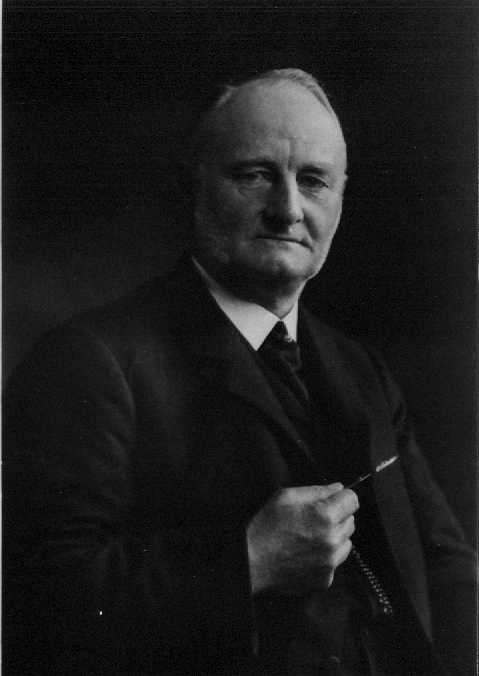
WILLIAM HENRY GURNEY SALTER (1837-1928) AND THE TOTLE


I have written here before about the role my ancestors played in the founding of London University. Baptists and other non-conformists, who were barred from graduating at Oxford and Cambridge, England’s only two universities, decided to start their own. My 3x great grandfather Samuel Salter bought a £100 share in the proposed institution and his son my 2x great grandfather William Augustus Salter was in the very first intake of students, studying Latin and Greek.

William Henry Gurney Salter (1837-1928)
a portrait from his "History of the Gurney System of Shorthand" 
published after his retirement in 1912

William’s son, my great grandfather William Henry Gurney Salter, followed in his father’s footsteps. He went to Amersham School (“for the sons of liberal gentleman”), where his father had been a Baptist minister; and then he too studied Classics at London University. Like his father, WHGS began his working life in the office of a London merchant. But in 1859 he joined the firm of Gurney & Co, shorthand writers; and in 1872 he succeeded his uncle Joseph Gurney there as Official Shorthand Writer to the Houses of Parliament, a post he held for over 40 years until his retirement in 1912.

On his death The Times printed a lengthy obituary, a measure of his long service at the heart of British political life. It dwelt of course chiefly on his professional and religious achievments; but there is a short, delightful passage about his personal life:

He was a great lover of poetry and pictures, and was a man of many friends; friendship played a great part in his life. Since the death of Sir John Rotton, K.C., he must have been the last of a small band of classical scholars known as the "Totle", who used to meet weekly to read Aristotle and other Greek authors, and who included in their number Theodore Waterhouse, Lord Cozens-Hardy, Lord Justice Kennedy, James Anstie, K.C., and Sir W.H. Winterbotham.

What a wonderful picture! The great and the good of the day, taking time out from their public schedule to share a laugh and a glass of something over some Greek philosophy with Alexander the Great’s tutor! Apart from anything else, it’s a rare bonus to be presented with a list of your ancestor’s friends. WHGS’s Totle circle were obviously important enough figures to be name-dropped in The Times, so who were they?

Brigadier General Sir John Rotton, K.C., (not pictured) WHGS’s last fellow Totler died in 1926. He served on the Council of London University from 1869 and donated his library, including several important theological tracts, to it on his death. Rotton and Salter were born in the same year, and perhaps went to school and university together.
James Anstie, K.C., was also born the same year as WHGS, and also an alumnus of London University, for whom later he was an examiner in common law and practice. He was called to the Bar the year Salter joined Gurney & Co. His wife was Annie Winterbotham, sister of fellow Totler William Winterbotham.
Theodore Waterhouse (1838-1891) was from a distinguished family of Quakers. No doubt therefore, he too attended London University. His architect brother Alfred designed London’s Natural History Museum; his brother Edwin is the Waterhouse in accountants PriceWaterhouseCooper; and Theo founded the London law firm now called Field Fisher Waterhouse.
Sir William Howard Winterbotham (1843-1926) was a neighbour of WHGS in Ladbroke Terrace, Kensington. He was not just another solicitor, but from 1895 The Official Solicitor to the Supreme Court of Judicature. Fellow Totler James Anstie married his sister Annie.
Sir William Rann Kennedy, Lord Justice Kennedy (1846-1915) was another prominent legal mind of his day; a failed Liberal candidate who ordered a by-election after accusations of Liberal bribery in Maidstone in 1900. A caricature of him in Vanity Fair in 1893 (the year after he was appointed) is captioned “our weakest judge;” but he was created a Lord Justice of Appeal in 1907 and a Privy Councillor two years later.
Herbert, Lord Cozens-Hardy (1838-1920), another alumnus of London University, was a lifelong friend of WHGS. Their connection went right back to their time together at Amersham School. Herbert’s daughter Hope married WHGS’s nephew Richard Austin Pilkington, and to this day at least one member of the Salter family uses the legal firm of Cozens-Hardy. Herbert was Master of the Rolls, the second most senior judge in Britain after the Lord Chief Justice.

It’s a legal Who’s Who of late nineteenth and early twentieth century England. Salter himself was called to the Bar at Lincoln’s Inn in 1874, although he never practiced. His Greek texts remained in the family until the death of my father, himself a Classics scholar and lecturer. Hooray for the Totle!

Aristotle, Museo Nazionale Romano, Rome
Roman 2nd century BC copy of a Greek 4th century BC original

Saturday, 5 May 2012

COLONEL WILLIAM MASSY BAKER (c1759-1829) AND THE WOMEN IN HIS LIFE


Why do I write about all these people? Sometimes it’s because I know they have a story worth telling. Sometimes I pick on someone precisely because I know nothing about them – it’s a way of forcing myself to look deeper into their lives. Sometimes you think there just must be a story, and only by starting to write can you tease it out of them – it’s like thinking aloud to know what you’re thinking.

William Massy Baker’s brother Godfrey was my 5x great uncle, who was married to my 4x great grandfather Eyre Massy’s sister Margaret. The Massy and Baker families intermarried pretty regularly, hence William’s middle name. William and Godfrey both served in the Bengal Army, one of three private armies owned and operated by the British East India Company.

The flag of the East India Company
before (above), and after the 1800 Act of Union

Granted its Royal Charter in 1600 to trade in the sub-continent, the Company exploited its trade monopoly to become the administrative power in large parts of India. It operated more or less beyond the control of the British government for 100 years, making its owners, British merchants and aristocrats, very wealthy men. Only after the Indian Mutiny of 1857-8 was the British Crown forced to assume some direct responsibility for the colony.

This was all after William’s time. He was a quartermaster in the Army, responsible for the purchase and distribution of supplies of all kinds. It was position from which he was able to generate a great deal of personal wealth, setting up a number of private commercial enterprises to boost his basic army pay. When he came home to Cork (in Ireland, another British colony) on leave in 1796, he splashed out a massive £2500 on a large estate in nearby Glanmire. There he built a well-appointed mansion which, after the manner of the times, he named Fort William.

Fort William, Glanmire, Cork

Generating wealth wasn’t Baker’s only enterprise. In Calcutta in 1785, he arranged the christening of Eleanor, his lovechild with an Indian mistress. It’s not clear whether he brought either or both of them back with him in 1796, but he certainly returned to Calcutta for another tour of duty from 1800 to 1806. When he finally came home to Ireland, it was to make a “suitable” marriage, in 1807, with Mary Towgood Davies.

Mary, daughter of a protestant minister, took over the running of the Fort William household. As one may readily imagine, she was keen to give William a fresh start, a break with the past. It’s known that one Dean Mahomet, an Indian guest in the house, left very quickly at this time.

What became of Eleanor, and indeed her mother? One report I’ve read says Eleanor, now 22, got married to a James Swayne. I can’t find any confirmation of this; but one of William and Mary’s many children (at least eight, some say twelve) was christened James Swayne Baker. Another, rather surprisingly, was called Eleanor Davies Baker.

Troops of the Bengal Army c1785

In writing about Eleanor I came across the remarkable Dean Mahomet, and learned more about my 5x great uncle Godfrey. (More on them in a future posting.) But Eleanor is the story I wanted to tell here. Such Anglo-Indian relationships were no doubt common; and no doubt wives were expected to accept the past and present affairs of their husbands. But to call your children James Swayne Baker and Eleanor Davies Baker is a sign either of a very understanding wife or of a very insensitive husband. Since I first posted this I have learned that William did indeed bring home his lovechild, named (according to my source) not Eleanor but Eliza; and Eliza did marry James Swayne, in 1814.

Saturday, 28 April 2012

HAMNET SADLEIR (active 1585-1616) AND HIS GODSON’S DAD


Some family stories are proved or even unearthed in the course of research. Others are disproved by the same process. Some remain beyond confirmation or debunking, the stuff of legend and speculation, a story good enough to tell whether or not it turns out to be true. With that in mind I’ll just tell this straight out and you can make up your own mind. Just the facts!

Hamnet Sadleir is reputed to be the grandson of my 11x great grandfather John Sadleir. That’s the part – admittedly a fairly fundamental part of a family story – that I can’t confirm. He was a baker in Stratford on Avon where another grandson, my 9x great grandfather (also John Sadleir) also lived. They may have been cousins, they may even have been brothers. (And yes, they may have been completely unrelated.)

Stratford on Avon, home of my ancestors and their friends

Hamnet married Judith. In 1585 the Sadleirs became godparents to the newborn twins of their friends Anne and William, such good friends that the new parents even named their new children Judith and Hamnet. When William, who died in 1616, wrote his will, Hamnet Sadleir was a witness.

One of the twins, Hamnet, died at the tender age of 11. His sister Judith married, in the year of her father’s death, Thomas Quiney, a tobacconist and vintner in Stratford on Avon born around 1589. Meanwhile my 8x great grandfather (yet another John Sadleir) married Elizabeth Quiney, born in 1587. Elizabeth certainly had a brother called Thomas – I don’t know for certain that he was the same Thomas who married Judith, but Judith’s Thomas’s father was called Richard Quiney – and so was Elizabeth’s and her brother’s.

Both Thomas and Judith Quiney outlived all three of their children. Young Thomas (named after his father) and Richard (named after his paternal grandfather) died within a fortnight of each other at the start of 1639, aged 19 and 20. The third had died long ago, only six months old, in 1617. Named after his maternal grandfather, the baby’s name was Shakespeare Quiney. That’s WILLIAM Shakespeare.

19th century German engraving of the Shakespeare household
Hamnet standing to his right, Judith leaning on his left shoulder

SO! If everything I have read and connected is true: Shakespeare’s daughter Judith was the sister-in-law of Elizabeth Quiney, my 8x great grandmother. Her godfather Hamnet Sadleir, witness to her father’s will, was a cousin, perhaps brother, of my 9x great grandfather. But only if.

Oh, and Hamnet Sadleir’s name on the will is spelled “Hamlett.”

Saturday, 21 April 2012

CATHERINE GURNEY O.B.E. (1848-1930) AND THE POLICE OFFICER’S SOUL


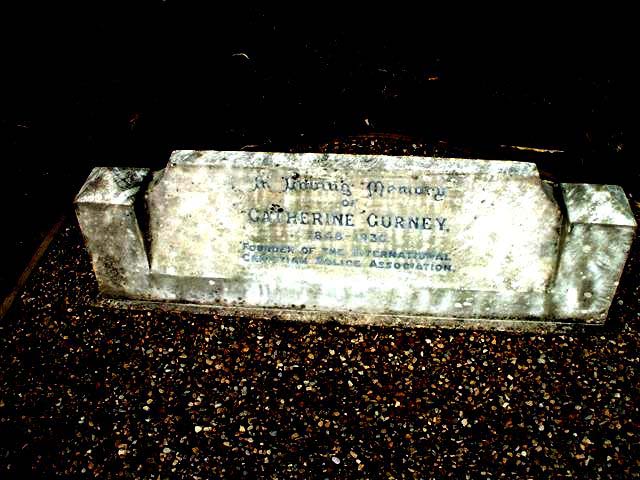
My great grandfather’s cousin Catherine Gurney (known as Katie in the family) founded four convalescent homes and orphanages for English policemen and their children. As I write I've just heard that on 22nd April 2012 a plaque is to be unveiled in Harrogate in honour of her work. It was a lifelong commitment to police welfare spurred by the observation of one serving officer whom she visited in hospital in the 1880s: that the force lacked the sort of provision afforded by the public to distressed members of Britain’s army and navy.

Catherine Gurney (1848-1930)

Her commitment came from a sense of Christian duty almost genetic in its depth. The Gurneys had been devout non-conformists since the earliest days of Quakerism, at least four generations before Catherine was born. That devotion had shown itself in radical acts of humanitarian charity such as opposition to the slave trade and the provision of education to women and children.

Katie’s desire to follow the family tradition of Christian service led her first, in the early 1870s, to start a Bible Study Class in Wandsworth – a high-security Men’s Prison in South London and scene from 1878 to 1961 of regular hangings for murder. Wandsworth was a long way from the comfortable surroundings of her west London home and she became quickly aware of the debt of gratitude owed to the policemen of the time who kept the streets safe on her journeys between the two.

The first gallows at Wandsworth Prison,
transferred from Horsemonger Lane Gaol in 1878
and installed in a shed built over a 12-foot deep drop-pit

Perhaps she chatted with them about the spark of goodness in even the most hardened criminal, or perhaps about the risk to policemen’s souls of exposure to so much evil in the world; but a remark by one of her protectors, “What? D’you think police officers have souls?”, set her thinking. Of course they did, and those souls needed nurture and support as much as any murderer’s.

In 1883 Miss Gurney founded the Christian Police Association and held prayer meetings at her home. As they became quickly popular, she moved them first to rented offices and then to a building at 1a Adelphi Terrace which became London’s first Police Insititute, a drop-in refuge from the stresses and temptations of the job.

On And Off Duty,
the magazine of the Christian Police Association in Britain

It was a landmark in police welfare, but Catherine Gurney was a woman with a mission. She began to travel the world promoting the values of the Association. In October 1891 she arrived in the United States as a delegate to the International Convention of Christians At Work. Between then and May the following year she met with representatives of police forces from Maryland to Michigan, and CPA’s sprang up throughout the eastern states (and in Toronto too!).

The very first US group was in Washington DC. In 1898 the president of the New York CPA wrote, “It has always seemed wonderful that the Lord thought so much of the policemen of America as to send Miss Gurney all the way across the water. Yes, God is interested in police officers. He it was who awakened in Miss Gurney’s heart the desire that He should bless them and Lo! what hath God wrought from that little seed.”

Policemen served as pallbearers at Catherine Gurney’s funeral in Harrogate, 13th August 1930

What indeed! Catherine Gurney, a small but determined woman, devoted 50 years of her life to police welfare. Her Christian legacy, now the International Christian Police Association, survives to this day, as does the work she began in her convalescent homes and orphanages. When her travelling days were over she remained active in their interest to the end of her life. When she died she insisted on being buried near her beloved Northern Police Orphanage and Convalescent & Treatment Centre on Otley Road, Harrogate in the grounds of All Saints Church, Harlow Hill.


Much information for this post comes from the splendid history of the CPA in the USA at http://www.cpa-usa.org/history.php. There is also a fine page about her work at http://www.stgeorgesharrogate.org/stg01gurney.htm, from which some of the photos in this article are taken. 

Saturday, 14 April 2012

JANE FARQUHAR REID (1833-1920) AND HER SERVICE AT GILMILNSCROFT


In a terrific example of sucking up to the local gentry, my 3x great grandfather William Reid named at least two and arguably four of his eleven children after the incumbents of the local Big House, Gilmilnscroft House in Sorn, Ayrshire. His eldest girl and boy were named after his parents Mary and Robert. (Luckily for him his resilient wife was also called Mary.) But thereafter, until he finally ran out of options, his children were all called after Gilmilnscroft’s inhabitants, James Farquhar and his wife Margaret née Baillie, or the nearest sounding equivalent.

Gilmilnscroft House, Sorn, in 1964
16th/17th century tower house with 19th century additions

William’s second daughter was my 2x great grandmother, whom he named Jane Farquhar Reid. Jane not only sounds like James, but was also James Farquhar’s mother’s name. Next came Jane’s sister, Margaret Baillie Reid. Then came a fourth daughter, called - the name Jane now no longer being available - Janet; and finally another son, christened James. Only with his third son did William feel free to bestow his own name onto the next generation. (Thomas, Helen, Grace and John completed the brood.)

Margaret and Jane were also the names of James and Margaret Farquhar’s daughters, so William Reid must have been pretty confident that he had done everything he could to express his allegiance to the Farquhar family. He was a coachman at Gilmilnscroft, and sure enough at least five of his children successfully found employment there.

Some 19th century Farquhars of Gilmilnscroft
(servants not pictured)

His eldest, Mary, was a housekeeper and sick nurse there. Second daughter Jane was maid to Margaret Farquhar. Third daughter Margaret was a domestic servant in the house. Eldest son James was like his father a coachman and domestic servant, until he married and moved to Glasgow. William junior was a gentleman’s nurse, until he caught tuberculosis and died. (They definitely held these posts, although I don’t know for certain, except in Jane and Margaret’s cases, that they all held them in the Big House; but such situations were not available anywhere else in the immediate area.)

Jane Farquhar Reid and Margaret Baillie Reid both eventually married and left service, Jane to John Piper in 1857 and Margaret to a Mr Kirkland in 1866. About 60 years later, Margaret’s grandson James Kirkland married Jane’s granddaughter Agnes, whom I knew as my great aunt Nessie. Nessie’s sister was my grandmother, Jean Farquhar Reid Piper. They had all by then moved up in the world: Nessie married a solicitor, and Jean married a doctor!
Related Posts Plugin for WordPress, Blogger...