All writing © 2009-2015 by Colin Salter unless indicated otherwise. All rights reserved.
More information at www.colinsalter.co.uk
Showing posts with label Collins. Show all posts

Saturday, 8 February 2014

WILLIAM COLLINS JENNINGS (c1808-1860) AND THE SS SOMERSETSHIRE


The first thing I found out about my 3x great uncle William Collins Jennings was that he bought a ship, the sloop Somersetshire in 1835. This article was going to be about that vessel; about the cargo of grain which the ship probably gathered for William, a corn merchant in Bristol; about Captain William Williams who was the ship’s master when Jennings and his partner James Smith bought it from John Jones and William Roberts, two merchants on the far shore of the Severn in Chepstow.


Typical early 19th century single-masted sloop (this one 37 tons, 41 feet long) – the Somersetshire was 48 tons, 47’ 8” long, 15’ 4” wide, and drew 7’ 6”

Unfortunately I haven’t found any further information about the Somersetshire, or about Jennings’ trade with her; so all that will have to be left to the imagination. In 1836 a schooner Somerset appears in the Lloyds Register of Shipping, based at Dartmouth and sailing between there and Wales, having been built in Bristol in 1827. Is it the same ship? It’s owned by then by Clift & Co, and C. Clift is its master. But with a coppered hull and at 83 tons it has either had a lot of work done to it or is a different vessel.

However in the course of not finding much more about the Somersetshire, I have built up a small picture of the life of William Collins Jennings which makes his purchase of the Somersetshire seem a surprising and reckless gamble. 

Born in 1808, married to Mary Ann Thomas in 1832, William was 27 when he bought the Somersetshire. Two years earlier in 1833, only a year after his wedding, he had been declared bankrupt. Two years after buying his ship, in 1837, he was declared bankrupt again. And on the 9th August 1843 he filed for bankruptcy once more. He had lost his job, as a clerk with the Great Western Railway, six days earlier; and in 1843 there was no safety net of a welfare state.

The train shed of the Great Western Railway at Bristol Temple Meads station, in an engraving by John Cooke Bourne of 1843 – the railway company was founded ten years earlier

The railway job had lasted three years and followed a three-year period of unemployment since the 1837 bankruptcy. In those six years, the 1843 notice of bankruptcy announced, he lived at eleven different addresses, some for only a few weeks. It was a graphic illustration of the fragility of his economic situation.

For the record, his addresses were:

58 Queen’s Square, Bristol (1 Jan 1837 to 29 Mar 1839)
Aust, Henbury, Gloucs (29 Mar 1839 to 12 Jul 1839)
Redwick, Henbury, Gloucs (12 Jul 1839 to 22 Oct 1839)
14 Wine Street, Bristol (22 Oct 1839 to 11 Nov 1839)
Doctors’ Commons, London (11 Nov 1839 to 30 May 1840)
14 Wine Street, Bristol (30 May 1840 to 24 May 1841)
Weston super Mare, Somerset (24 May 1841 to 8 Aug 1841)
9 Queen’s Square, Bristol (8 Aug 1841 to 1st Jun 1842)
Belmont House, Bedminster, Bristol (1 June 1842 to 1st Jan 1843)
Laura Place, Bedminster, Bristol (from 1 Jan 1843)

Queen’s Square, today the elegant heart of Bristol

These addresses raise some questions. From August 1840 the frequent moves could be explained by postings in his work for the GWR. Queen’s Square is today a very elegant address, although it has probably been renumbered since William’s time: the present no. 58 is the Customs House! But the square is also the location of the Sailors’ Refuge, and in 1837 it may have been much less des res following the destruction of much of it in the riots of 1831. Wine Street was also grand – completely destroyed in the blitz of the Second World War, it was in the 1930s a street of fine shops second only to London’s Regent Street in value. 

Wine Street, Bristol, from a magazine article of 1878 about “Old Bristol”

His time at Doctors’ Commons is intriguing. He was still out of work. What could have taken him for six months to London, and to the place where the proceedings of the civil law courts were held? Doctors’ Commons functioned for lawyers specializing in civil law in the same way that the Inns of Court do for practitioners of common law, housing offices and living quarters for its members. Already active in the 16th century the society was largely obsolete by the 19th, described by Charles Dickens in David Copperfield as a “cosey, dosey, old-fashioned, time-forgotten, sleepy-headed little family party.” It finally fell asleep in 1865, and the buildings in which Jennings seems to have lived were demolished in 1867.

Doctors’ Commons, in an engraving of 1808 by Augustus Pugin Senior and Thomas Rowlandson

William Jennings struggled on. At the census in 1851 he was living with his family in St Martin’s on the island of Guernsey, describing himself himself a “retired” merchant. His wife has no declared profession; so with three children under the age of 15, how was the family getting by? Perhaps Mary Ann had a private source of income. She died before William, who spent his last days in poverty in Hackney. At the time of his death his worldly goods were valued at less than £20, which wouldn’t buy you much of the Somersetshire or any other sloop.

Saturday, 11 January 2014

WILLIAM HENRY CASTLE (1810-1865) AND THE STOKES CROFT BREWERY


For Bristol Beer Week in October 2013, the Ashley Down microbrewery rustled up a special brew, Stokes Croft IPA (that’s India Pale Ale for the uninitiated). The brewery is in the St Andrews district of Bristol, and Stokes Croft is the road that leads to it from the city centre.

Stokes Park IPA, specially brewed by Ashley Down microbrewery for Bristol Beer Week 2013

The road was also the site until the second world war of the Stokes Croft Brewery, which stood at the corner of Stokes Croft and City Road. In the 1830s it was run, under the name of Castle & Rees, by two brothers in law: my Carmarthen-born 3x great uncle Thomas Rees and my Bristol-born great great grandfather William Henry Castle. Thomas had married Susannah Capel Jennings and William her younger sister Caroline Collins Jennings.

(A third sister, Henrietta Collins Jennings was the wife of the engineer Thomas Richard Guppy of whom I have written here; and a fourth, Margaret Collins Jennings married William Lambert and inherited a house belonging to her uncle Thomas Collins, about which I wrote last year.)

The last remaining buildings of the Stokes Croft Brewery survive as Bristol’s Lakota Nightclub

William and Thomas also ran, under the name Rees & Castle, the Nursery Brewery on Kent Street in Liverpool, where Thomas had by 1837 made his home. I don’t know when they entered into partnership together. William was already a brewer when he married Caroline in Liverpool in 1837; and perhaps they met through her sister, the wife of his business partner. Thomas Rees was among the witnesses at William and Caroline's wedding.

There was a second brewery on Kent Street, the Mersey Brewery, in which William and Thomas were joined by a third Jennings brother in law, Thomas Richard Guppy. They brewed Mersey porter ale, and had traded as Guppy, Rees and Co since at least 1838 (when Guppy brought a court case against a carpenter for late completion of work on the brewery). But Guppy withdrew on 2nd March 1840 to concentrate on his engineering career. Castle too dropped out of that operation exactly two years later, leaving Rees in sole charge there.

The brothers in law formally dissolved their Stokes Park and Nursery partnership on 10th August 1842, but I don’t think there was any crisis. Two small breweries in two cities 180 miles apart probably had little to gain from shared ownership when one partner lived in each city. Thomas concentrated on the Liverpool sites and William took on sole ownership of Stokes Croft.

Stokes Croft at the junction with City Road, c1918 (brewery just out of sight on the right)

The families on the other hand remained very close. William and Caroline Castle’s daughter Emily was visiting her uncle Thomas and aunt Susannah Rees at the time of the 1861 census, and a year later there was a Rees-Castle partnership of a different kind when Emily married their son Lambert Thomas Rees, her first cousin.

By then both men had moved out of brewing and into grain processing. Thomas was a corn merchant and William a rice dresser – cleaning up imported rice to prepare it for sale. The Stokes Croft Brewery went through a series of owners. Foll & Abbott had it in the 1860s when they sold F&A pale bitter ale for a shilling a gallon. In the early 1880s it was owned by Hereford company Harvey & Co, who sold it on to Arnold, Perrett & Co in 1889. R.W. Miller & Co took it on only four years later, and Georges & Co bought it in 1911. Having survived Bristol’s blitz in the second world war it finally closed down in 1948.

Avonmead, postwar shops and flats on the site of the Stokes Croft Brewery

At 6.1% Stokes Croft IPA is not a beer merely to quench your thirst with, and no doubt much stronger than the ale produced by its eponymous predecessor. But it has strength too in the history carried in its name.

Saturday, 22 December 2012

HENRIETTA PATTERSON (1737-1824) AND THE GIFT OF A TURBOT


Henrietta Patterson and Thomas Collins, aunt and uncle of my 3x great grandmother, were married on 19th November 1761. Mr Collins, according to his obituary in The Gentleman magazine, "had the happiness to be united to a lady whose views in life were quite accordant with his own."

Thomas was a successful builder, and an ornamental plasterer of distinction, the favourite of the great 18th century architect Sir William Chambers. His wife Henrietta was “a bright example of conjugal affection and urbanity.” Certainly Thomas, and presumably to some extent his wife too, mixed in the most urbane circles imaginable for the time – he was “a desirable member of the society of Dr Johnson,” the pre-eminent wit and raconteur. 

 Samuel Johnson (1709-1784),
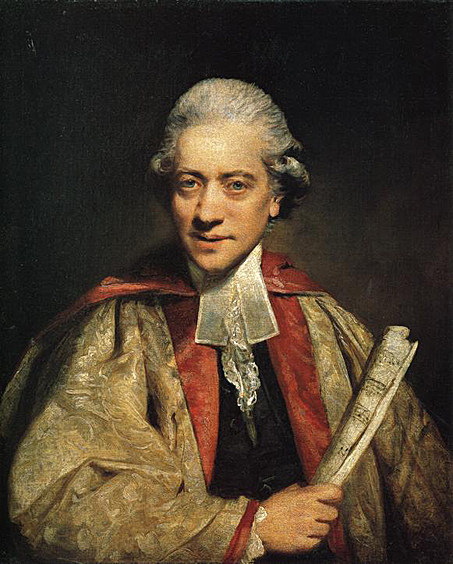
Giuseppe Baretti (1719-1789) and Charles Burney (1726-1814)
all painted by Sir Joshua Reynolds, another member of their circle

The obituary drops in the names of other members of the Collins’ circle, with which I am less familiar, but which presumably would have impressed the reader in 1830 – Giuseppe Baretti was a literary critic and friend of Dr Johnson; William Strahan was the publisher of many of Johnson's works including his celebrated Dictionary; John Nichols published Johnson's Lives of the English Poets; Rev Dr Charles Burney was another friend of Johnson and a noted music historian; Major James Rennell was surveyor-general of Bengal and a pioneer of the emerging science of oceanography. All are recorded as friends of the Collins's.

William Strahan (1715-1785) by Reynolds, 
James Rennell (1742-1830) by Scott,
and Sir Harry Trelawney (1756-1834) by an unknown artist

The private papers and public impressions of the work of all these great men are the substance of weighty archives in universities and galleries around the world. But I'm delighted to own a letter written to my 5x great aunt Henrietta Collins nee Patterson in 1795. It's not from any of the above; but it's written in very much the same sparklingly witty tone that one would expect from any of that circle, by a certain Thomas P. Walter. I think Walter may have been another of the Johnson crowd, as he makes reference to Johnson in the letter, and he may have been a doctor, as he discusses ships' hospitals at one point.

Mr Walter writes from Yarmouth, where he is hoping to catch a packet boat, but keeps missing his chances by virtue of not getting up early enough. A few days since, he writes, I was going to embark with two Turks, a Jew, a Frenchman, a Bankrupt and Sir Harry Trelawney, but the vessel sailed before breakfast, and I let Monsieur, Moses and the two Musselmen get maukish together without contributing to “the publick stock of harmless pleasure” as Johnson says on another occasion. As to myself, I always prefer embarking after dinner, and I may then politely say to every morsel, before I swallow it, “Jusq’au revoir.”

A British coastal packet

He complains about shortages caused by the war – the Napoloeonic War – which result in too few beds for the number of passengers on board the packets, whose scheduled journeys along the coast might last several days. A packet that makes up only eight beds, carries twenty, thirty and forty people. I am sure this war must be materially against the interests of the country!

He wishes Thomas and Henrietta good health and recommends the sea air. But the main purpose of his letter is to warn Henrietta that he has occupied himself while waiting in sending her an unusual gift. In one wonderful sentence he announces, I should not have troubled you with this letter but to say that I have availed myself of my situation here to add to my gratifications by forwarding to you a Turbot with the proper appendages, which I take the liberty of hoping you will do me the Honour to accept.

A turbot

A turbot! It's not quite as far-fetched as it sounds. A fish could be packed in ice or straw to keep it fresh. But from Yarmouth in Norfolk to Mrs Collins’ address in Berners Street in central London is 115 miles as the crow flies, perhaps 150 by mail coach - a long day's journey. A flat fish sent on 22nd July (the date of Walter's letter), even in a wet English summer such as they were having that year, would be less than fresh by the time it arrived. Perhaps Thomas Walter is acknowledging that when he adds, it will be a fine one – at least I trust you will rely on the intention.

I do sometimes wonder if the whole thing is a practical joke, leaving Henrietta in dread of a rotten fish which never arrives. Thomas cheerily signs off his letter with another splash of grim humour: I propose daily to get into one of these Calcutta Cutters where I may be either smothered or drowned. Adieu, dearest Madam, your ever obliged, devoted & affectionate Th. P. Walter.

Whatever you're eating on Christmas Day, Season's Greetings from Tall Tales!

Saturday, 11 February 2012

THOMAS COLLINS (1735-1830) AND HIS FANCY PLASTERING


I was set off this week on a piece of detective work by the successive hand-written notes on the back of a framed drawing of an unidentified house. Various mysteries arose from my complete ignorance of my great great grandmother Caroline Collins Jennings’ family, but what became clear was that I am in some way related to Thomas Collins, whose house the building turned out to have been.

The house, now Woodhouse College in Finchley, is described online as the former home of “the well-known plasterer Thomas Collins,” so I’ve been digging to discover just how well-known he was. Quite well known, as it turns out. He wasn’t just some popular local tradesman who had a way with lath and lime; Thomas Collins was ornamental plasterer of choice for the great 18th century Scottish architect Sir William Chambers.

The Pagoda at Kew and The Pineapple at Dunmore, both 1761

Chambers built houses, mansions and follies for the highest in the land, and very often Collins decorated them. He spent some time in China, the inspiration for several fanciful buildings in London’s Kew Gardens. Kew may have inspired John Murray, 4th Earl of Dunmore, to commission Chambers to design the eccentric Dunmore Pineapple near Falkirk in Scotland (now a Landmark Trust property which you can rent for holidays – I’ve slept there!).

Relatively nearby, and now engulfed by Edinburgh, stands Duddingston House, built in the 1760s for James Hamilton, 8th Earl of Abercorn and a surviving example of Chambers’ work with Collins. The building’s great glory is its central hall, whose Collins ceiling plasterwork has recently been restored by the owners.

Duddingston House –
hall ceiling by Thomas Collins

But most of Chambers’ work, and most of Collins’ too, was executed in London. In the 1760s Chambers undertook a massive extension of Buckingham Palace, adding two wings, three libraries and a riding house. I don’t know if he used Collins or not at the Royal residence, and none of his work there survives now. Many other buildings do survive, including his masterpiece – and fellow genealogists will understand the pleasure it gives me to be connected to this one – Somerset House.

Somerset House was home for many years to the Registrar General, on whom we researchers of ancestry rely so heavily. It has housed many great departments of state since construction of William Chambers’ design began in 1776, including the Admiralty and the one we all love to hate, Her Majesty’s Revenue and Customs – the taxman.

The Strand Vestibule, Somerset House
by Sir William Chambers and Thomas Collins

Of the many parts of this sprawling building (which Chambers’ did not live to see completed), the Strand Block contained the entrance vestibule described by Chambers as “a general passage to every part of the whole design,” and rooms for various Learned Societies, intended for “the reception of useful learning and polite arts.” These were the parts of his design where he considered “specimens of elegance should at least be attempted;” and they are the parts where he employed Thomas Collins’ craftsmanship to its fullest extent.

A room in the Strand Block of Somerset House –
plasterwork by Thomas Collins, ceiling paintings by Sir Joshua Reynolds

Collins also worked on his own behalf, sometimes in partnership with John White, another associate of Chambers. A number of houses in London’s prestigious Harley Street are their work. Collins was a skilled man, and his success allowed him (I think) to undertake the conversion of a row of three houses in Finchley into one dwelling, Woodhouse – the building of which I have inherited the faded pencil drawing which set me off on this trail of architectural investigation. I'm so proud of where it has led me.

Saturday, 4 February 2012

THOMAS COLLINS (1735-1830) AND THE WOODHOUSE LEGACY


My father-in-law talks about leaving things on the Too Difficult pile, and goodness knows that’s often a very tall pile when it comes to family tree puzzles. One of the items in my Too Difficult pending tray has been for a long time this faint pencil drawing of (presumably) a former family home. It came to me amongst the many family papers which I inherited from my uncle John, and although there are some hand-written notes on the back, they refer to people I had never come across. So they only deepen the conundrum.

Woodhouse, Finchley
(computer-enhanced from a faded pencil sketch)

There’s no indication of the artist. On the back is written the name of the place – Woodhouse, Finchley – and the note “owned 1st by Uncle Thomas Collins & left by him to Aunt Lambert” and, I think in a second hand, “my Castle grandmother’s sister.” Then a third faint hand, probably of my Aunt Pamela, John’s wife, has written on a sticker, “EMS grandmother was Caroline Jennings who m. William Henry Castle, their son was EMS father William Henry.” At the bottom on the back, someone – probably John – has added, “1965. Removed from frame to be photographed for Col Busby.”

The rear view of Woodhouse, Finchley

I have another picture with multiple notes on the back, the identity of whose hands I do know. (I wrote apiece about that picture here a couple of years ago.) On that picture, one writer adds a footnote to a description, “This was written out for me by my mother” and signed “May Salter.” Sure enough, May’s writing of the word “mother” and the hand that wrote “my Castle grandmother” on the Woodhouse sketch are identical.

So Aunt Lambert is sister to Caroline Castle nee Jennings, grandmother of Eleanor May Salter nee Castle (who is MY grandmother!). Aunt Lambert is a 3x great aunt I never knew I had. Was Lambert her married surname, or her Christian name? And who was Thomas Collins to her? May’s grandmother’s full name was Caroline Collins Jennings (1816-1876), so perhaps her mother was a Collins.

Woodhouse College in 2011
with the remodeled façade of 1888

The Wikipedia entry for the Woodhouse area of Finchley describes its origins with three houses called the Woodhouses sometime before 1655. In the mid 18th century there was a single house of this name and it was home, says Wiki, to the well-known plastererThomas Collins! It was reconstructed in 1888 (when the bay window just discernable in my pencil drawing was replaced with a grand classic façade with a pillar'd entrance). In 1925 it became Woodhouse Grammar School, now Woodhouse College. In 2012 it is hosting tennis camps for the young in the run-up to the London Olympics.

Well-known 18th century plasterer Thomas Collins was the subject of a biography published in 1965 by John Henry Busby, “Thomas Collins of Woodhouse, Finchley and Berners Street, St. Marylebone.” That solves the mystery of the 1965 footnote, and there’s further confirmation in the existence of the Thomas Collins Papers, an archive of correspondence at the Centre for South Asian Studies donated by Col TH Busby, my uncle John and my aunt his cousin Deborah Scott nee Castle!

Thomas Collins’ blue plaque
outside the Woodhouse College office

Collins (1735-1830) was barely contemporary with 19th century Caroline Jennings (1816-1876). I can find no trace of her sister Aunt Lambert, or any of Caroline’s family except her father William Jennings. When Thomas died at the grand age of 95, Caroline was only 14 and presumably Lambert was of a similar age; why leave her the big house at Finchley? As always, there are as many questions as answers in the Too Difficult pile; but at least, by figuring things out this far, I have replaced some of the questions with others!

STOP PRESS! Thanks to the generous intervention of the Birmingham & Midlands Society for Genealogy and Heraldry (via Twitter) I now know who Aunt Lambert was - Caroline's sister Martgaret Collins Jennings (1802-1877) married William Lambert. He must have made an impression. Caroline and Margaret's oldest sister Susannah Rees nee Jennings had a son she called Lambert Rees.
Related Posts Plugin for WordPress, Blogger...