All writing © 2009-2015 by Colin Salter unless indicated otherwise. All rights reserved.
More information at www.colinsalter.co.uk
Showing posts with label Cozens-Hardy. Show all posts

Saturday, 15 August 2015

JOHN COZENS (b. c1772) AND THE CORNER SHOP EMPIRE


John Cozens, an ancestor by marriage of my Pilkington cousins, was a grocer in Norwich at the end of the eighteenth century. His shop stood in the town’s huge marketplace, on the side known as Gentleman’s Walk because it was where the local gentry promenaded and spent their wealth.

The location certainly worked for John Cozens – in 1801 he was turning over £400 a month, a huge amount. It’s interesting in the light of subsequent developments that £300 of that sum was in wholesale – selling not to the public but other traders.

Norwich Marketplace (Robert Dighton, 1799) 

By 1809 Cozens was in partnership with one John Copeman, who was on the payroll in some capacity in 1802 but was now putting money into the company of Cozens & Copeman. The two men became connected in a personal way when Copeman, whose first wife had died, married Elizabeth Hawkins, the sister of Cozens’ wife Mary.
John and Elizabeth’s son joined the business, and when Cozens retired in 1837, the firm became Copeman & Son.

That in a sense is the end of the Cozens element of this story. But the firm remained in Copeman hands and under the Copeman name (latterly as Copeman-Ridley) until 1987 – almost two hundred years after John Cozens first moved to Norwich from his father’s farm in 1789. 

Successive generations of Copemans built up the wholesale side of the business and in 1873 sold off their retail premises in Gentleman’s Walk. From then on (to my unbusinesslike mind) it’s a fairly dull tale of expansion, of mergers, of weathering economic storms. But in 1954, following a study tour of northern America, the then chairman W.O. Copeman launched a name which will be familiar to high street shoppers throughout Britain and Ireland – Mace convenience stores.

My local Mace, South Bridge, Edinburgh

Mace was one of the first franchise operations in Britain, in which independent store owners subscribed to the group and received benefits of economies of scale in national branding and wholesale supply which they could never have as individual traders.

It was a huge success and the model for subsequent “symbol groups” such as Premier and Nisa-Today. When the brand was sold out of Copeman control in 1987 it suffered from a series of new owners who sometimes struggled to understand the needs of its franchisees. Many retailers left Mace for other so-called “symbol groups,” but even now there are 1200 Mace stores in Britain and Ireland. At its height Mace supplied nearly 5000 affiliated corner shops and convenience stores, and all because of the grocery store which John Cozens began 226 years ago in the marketplace in Norwich.

Saturday, 12 May 2012

WILLIAM HENRY GURNEY SALTER (1837-1928) AND THE TOTLE


I have written here before about the role my ancestors played in the founding of London University. Baptists and other non-conformists, who were barred from graduating at Oxford and Cambridge, England’s only two universities, decided to start their own. My 3x great grandfather Samuel Salter bought a £100 share in the proposed institution and his son my 2x great grandfather William Augustus Salter was in the very first intake of students, studying Latin and Greek.

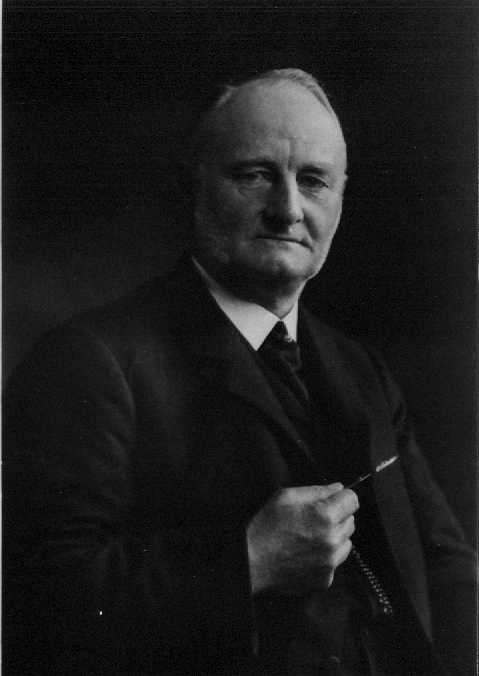
William Henry Gurney Salter (1837-1928)
a portrait from his "History of the Gurney System of Shorthand" 
published after his retirement in 1912

William’s son, my great grandfather William Henry Gurney Salter, followed in his father’s footsteps. He went to Amersham School (“for the sons of liberal gentleman”), where his father had been a Baptist minister; and then he too studied Classics at London University. Like his father, WHGS began his working life in the office of a London merchant. But in 1859 he joined the firm of Gurney & Co, shorthand writers; and in 1872 he succeeded his uncle Joseph Gurney there as Official Shorthand Writer to the Houses of Parliament, a post he held for over 40 years until his retirement in 1912.

On his death The Times printed a lengthy obituary, a measure of his long service at the heart of British political life. It dwelt of course chiefly on his professional and religious achievments; but there is a short, delightful passage about his personal life:

He was a great lover of poetry and pictures, and was a man of many friends; friendship played a great part in his life. Since the death of Sir John Rotton, K.C., he must have been the last of a small band of classical scholars known as the "Totle", who used to meet weekly to read Aristotle and other Greek authors, and who included in their number Theodore Waterhouse, Lord Cozens-Hardy, Lord Justice Kennedy, James Anstie, K.C., and Sir W.H. Winterbotham.

What a wonderful picture! The great and the good of the day, taking time out from their public schedule to share a laugh and a glass of something over some Greek philosophy with Alexander the Great’s tutor! Apart from anything else, it’s a rare bonus to be presented with a list of your ancestor’s friends. WHGS’s Totle circle were obviously important enough figures to be name-dropped in The Times, so who were they?

Brigadier General Sir John Rotton, K.C., (not pictured) WHGS’s last fellow Totler died in 1926. He served on the Council of London University from 1869 and donated his library, including several important theological tracts, to it on his death. Rotton and Salter were born in the same year, and perhaps went to school and university together.
James Anstie, K.C., was also born the same year as WHGS, and also an alumnus of London University, for whom later he was an examiner in common law and practice. He was called to the Bar the year Salter joined Gurney & Co. His wife was Annie Winterbotham, sister of fellow Totler William Winterbotham.
Theodore Waterhouse (1838-1891) was from a distinguished family of Quakers. No doubt therefore, he too attended London University. His architect brother Alfred designed London’s Natural History Museum; his brother Edwin is the Waterhouse in accountants PriceWaterhouseCooper; and Theo founded the London law firm now called Field Fisher Waterhouse.
Sir William Howard Winterbotham (1843-1926) was a neighbour of WHGS in Ladbroke Terrace, Kensington. He was not just another solicitor, but from 1895 The Official Solicitor to the Supreme Court of Judicature. Fellow Totler James Anstie married his sister Annie.
Sir William Rann Kennedy, Lord Justice Kennedy (1846-1915) was another prominent legal mind of his day; a failed Liberal candidate who ordered a by-election after accusations of Liberal bribery in Maidstone in 1900. A caricature of him in Vanity Fair in 1893 (the year after he was appointed) is captioned “our weakest judge;” but he was created a Lord Justice of Appeal in 1907 and a Privy Councillor two years later.
Herbert, Lord Cozens-Hardy (1838-1920), another alumnus of London University, was a lifelong friend of WHGS. Their connection went right back to their time together at Amersham School. Herbert’s daughter Hope married WHGS’s nephew Richard Austin Pilkington, and to this day at least one member of the Salter family uses the legal firm of Cozens-Hardy. Herbert was Master of the Rolls, the second most senior judge in Britain after the Lord Chief Justice.

It’s a legal Who’s Who of late nineteenth and early twentieth century England. Salter himself was called to the Bar at Lincoln’s Inn in 1874, although he never practiced. His Greek texts remained in the family until the death of my father, himself a Classics scholar and lecturer. Hooray for the Totle!

Aristotle, Museo Nazionale Romano, Rome
Roman 2nd century BC copy of a Greek 4th century BC original
Related Posts Plugin for WordPress, Blogger...