All writing © 2009-2015 by Colin Salter unless indicated otherwise. All rights reserved.
More information at www.colinsalter.co.uk

Saturday, 26 January 2013

GUNDREDA DE GOURNAY (c1093-1154) AND THE ABBEY AT BYLAND


Amongst my Gurney ancestors, Hugh de Gournay came over to England with William the Conqueror in 1066. By then he was already an important military figure, having commanded the Norman fleet in 1035. Hugh’s grandson Gerard de Gournay (still using the Norman spelling of his name) married Edith de Warren, a daughter of William first Earl of Warren (another Norman) and his wife Gundreda, who was herself a daughter of William the Conqueror.


This was a connection worth advertising. Wisely, like so many fathers since, Gerard decided to name one of his daughters after his mother in law. Born in around 1093 Gundreda de Gournay was beautiful, known to all as La Belle Gondrée, and she is my 29x great aunt.


The ruins of St Leonard’s Hospital, York, built after fire destroyed the city's St Peter’s Hospital in 1137 – St Leonard’s held lands donated by Gundreda de Gournay


Aunt Gundreda in turn married well, to Neil D’Aubigny, who had inherited the confiscated lands and title of another Norman family, Montbray (anglicised as Mowbray). After the death of Neil she continued to live in Thirsk Castle, the D’Aubignys’ stronghold in Yorkshire. She also enjoyed an annual stipend of £41 12s 3d drawn from revenues from Brinklow Castle, a former Mowbray motte and bailey in Warwickshire. She used her wealth for good works, and there is an undated record of her donation of four oxgangs of land at Bagby (just outside Thirsk) to the Hospital of St Leonard in York. (An oxgang was the amount of land an ox could plough in a season, around 15-20 acres, so this was a generous gift.)


It wasn’t all plain sailing for the new Norman rulers of England, and as so often before and since the Scots were the problem. In the mid-1230s a group of twelve monks led by Abbot Gerald fled a Scottish assault of their church at Furness in Lancashire, and arrived in York looking for a new home. There, Archbishop Thurstan received them graciously and promptly directed them to Gundreda a few miles to the north in Thirsk, mindful perhaps of her kinship with Stephen de Blois, founder of Furness Abbey and a grandson of William the Conqueror.


Furness Abbey, founded in 1123 by Stephen de Blois, a grandson of William the Conqueror (engraving by Thomas West, 1774)


From a sense of family duty Aunt Gundreda did what she could to accommodate and entertain the homeless Cistercians, but in 1238 passed them on to a relative, Robert D’Alnetto. D’Alnetto was a former monk at Whitby on the Yorkshire coast now living as a hermit at Hode, east of Thirsk on the moors above Helmsley. There they founded a new church dedicated to St Mary and St William.


Whitby Abbey, founded in the 11th century by Reinfrid, a soldier of William the Conqueror


Under a certain amount of pressure from Thurstan, Gundreda continued to send provisions to the monks, but their needs must have been a drain on her fiscal and administrative resources. In 1140, after her son Roger de Mowbray came of age and took control of family affairs, she persuaded him to endow the new church with cow pastures at Cam Farm and other lands in East Yorkshire (at Wildon, Scackleton and Ergham) so that they could generate income and provide for their own needs.


Finally in 1143 Gundreda and Roger moved the whole operation down off the moors to Byland, a fertile sheltered dip in the hills where the monks built (with Mowbray money) one of the most beautiful little abbeys in Yorkshire. I'm a Scot, and I married a Yorkshire girl; so I'm really pleased with the way this all worked out!


Byland Abbey, from The Record of the House of Gournay by Daniel Gurney (1848), founded in 1143 in part by Gundreda de Gournay, a great granddaughter of William the Conqueror

Saturday, 19 January 2013

JOHN COOPER GOTCH (1772-1852) AND THE BAFFLING BANK BREAK-IN


Kettering in Northamptonshire is sometimes called The Town That Gotch Built. The Gotch family were prominent in the town for 150 years, but in many ways my 3x great grandmother’s cousin Mary Anne Davis married the Gotch who made the most.

John Cooper Gotch was the only surviving child of thirteen of Thomas Henry Gotch, a Leicestershire farmer who brought the family to Kettering and started making boots there. Thomas Gotch was a deacon of his local Baptist chapel in Kettering and influential in the founding of the Baptist Missionary Society in October 1792. His financial support of its early missionaries developed into a fully fledged banking operation, which was grown when John Gotch took over the running of both the financial and footwear operations. (John in turn handed them on to two of his sons, who – initially at least – made a bit of a hash of things. But that’s a story for another time.)

Gotch boots were originally made as piecework in the homes of the bootmakers – this factory in the centre of Kettering was designed later in the nineteenth century by John Cooper Gotch’s grandson, renowned architect John Alfred Gotch (1852-1942) – another reason why Kettering is The Town That Gotch Built

With John at the helm things went from strength to strength. The bootmaking factory employed 500 people at its height and the bank had added an insurance operation for the benefit of missionaries for whom such earthly protection could be hard to find. At the time of his death the Gotch assets extended beyond the firm’s core activities to a tannery and a brewery.

The bank was at first a partnership, Keep, Gotch & Cobb, only later known as Gotch & Sons. In 1812, when it was still called Keep & Gotch’s Bank, it had the embarrassing experience of being broken into without knowing it. A gang led by a local ne’er-do-well called Huffey White entered the premises of the Kettering bank so easily and with so little trace that Messrs Keep and Gotch were completely unaware that Huffey had been there at all. It was only some time later that it came to light; when White was arrested for another burglary, one of his accomplices turned king’s evidence and confessed to the earlier crime.

Even then, Gotch and Keep were incredulous – surely such a thing was not possible without their knowledge? Only when the informant recited information about accounts and balances which he could only have known by reading ledgers kept in the bank did the owners accept the truth of the matter.

 An 18th century iron chest used by the Bank of Scotland; 
and a wrought iron chest from the 1820s, 
this one made by James Gray of Edinburgh
Safes in the modern sense began to appear in the 1830s and 1840s.

Apart from their tidiness as burglars, another reason for their invisibility was that they didn’t take anything. As they were searching the premises for loot, the gang came across a big old iron chest which they couldn’t open. Rather naively, they imagined that it must contain gold, in the manner of a pirate’s treasure chest; but with a certain criminal logic they decided that, since they had broken in so easily this time, they would slip away leaving everything as they had found it, and come back again another time with a selection of suitable keys.

It was a good plan in essence, and might well have worked had Huffey White not soon afterwards been fingered by around forty witnesses for the theft of money and papers from the strongbox of the Leeds-London mail coach. White and his accomplice Richard Kendall were arrested, despite their violent resistance, in a house cellar in Liverpool the following April. They were to be tried by Judge Baron Thomson, who two months earlier, in January 1813, sent 17 Luddites to the gallows with the no-nonsense remarks, “It is of infinite importance to society that no mercy should be shown to you. It is important that your sentence should be speedily carried out and it is but right to tell you that you have but a short time to remain in this world. I trust not only those who now hear me but all without these walls to whom the tiding of your fall may come, will be warned of your fate.” 
White and Kendall cannot have held out much hope for their own future.For this crime there was no turning king’s evidence. They were found convincingly guilty by the jury, and sentenced by the learned judge to death by hanging. Which rather put an end to any plans to return to Gotch’s bank for another crack.

A one-pound banknote 
issued by John Keep, John C. Gotch & Co in the 1810s

Saturday, 12 January 2013

WILLIAM HENRY ANGAS (1781-1832) AND THE SEAMEN’S MISSIONS


Woody Allen has a stand-up routine about a bullet in his protagonist’s pocket saving his life by deflecting a Bible falling from an upper storey. It’s a reversal of the apocryphal story in which a Bible in a soldier’s breast pocket stops a bullet from entering his heart. For sailor William Henry Angas it was a torn pocket edition of Dr Watt’s Hymns (the 1707 classic Baptist collection) which turned his life around.

Isaac Watts (1674-1748)
hymn writer

I described Angas’s testing early experiences as a merchant seaman in my last post here. He was freed from a French prisoner of war camp at Dunkerque in around 1802, where he had bought the hymnal from one of his captors. Still under twenty-one, his experiences and the completion of his navigator apprenticeship earned him the command of the Venerable, one of his father Caleb Angas’s fleet of sailing ships.

Caleb appointed his ships’ masters as much for their missionary zeal as for their nautical abilities, so perhaps he recognised William’s potential even before William himself did. For several years William sailed to Central America and the West Indies in his father’s service, during which there seems to have been no respite from the trials of life at sea – his 1895 biographer Richard Welford reports that on his second voyage the crew mutinied.

His third trip was if anything worse: on 6th June 1803, during the outward run, his brother Caleb junior drowned, and on the way back the ship ran aground and was lost along with its cargo (both, Welford notes, uninsured). William began to suffer from regular bouts of yellow fever, which eventually forced him to take a shore job as a ship’s husband – the land-based agent responsible for managing a ship’s crew, repairs, provisions and paperwork.

Dr John Rippon (1751-1836)
pastor to Sailorstown

All the while William Henry Angas’s faith was deepening. He was baptised at the end of 1807 by the great Dr Rippon, one of the giants of the early nineteenth century Baptist movement. Rippon, who in 1787 had published a very successful supplement to Watt’s Hymns known as Rippon’s Selection, was pastor for 63 years of the Carter Lane Chapel in a rough area of south London known informally as Sailorstown.

Carter Lane played a key role in nineteenth century Baptist history. Baptist churches are traditionally quite independent of each other, preferring that each congregation be guided not by any centralised doctrine but directly by God. It was at Rippon’s church that the idea of the Baptist Union, an administrative collaboration of Baptist churches, finally got off the ground in 1812; and on his death in 1836 Rippon was succeeded by a young cousin of William’s, my 3x great uncle Joseph Angus. Joseph was himself succeeded as pastor there by C.H. Spurgeon, the great charismatic Baptist preacher of the late nineteenth century – there must have been something about that congregation!

Rev Joseph Angus (1816-1902) and Charles Spurgeon (1834-1892)
 pastors at New Park (the expanding Carter Lane congregation relocated to New Park in 1833)

Freed from the very physical hardships and duties of actually guiding a ship over the ocean, William began to focus on the spiritual vacuum faced by sailors ashore. The need for a mission to seamen became clear to him, and he set about preparing himself for that mission with single-minded determination. In 1816 he studied theology at Edinburgh University in Scotland (as in later years did his cousin Joseph – because nonconformists were not allowed to receive degrees by the only two English Universities, Oxford and Cambridge). He then spent three years in Europe learning Dutch, German and French, while building up a network of friends amongst the protestant churches of those countries. Finally in 1821-22 he attended Stepney Baptist College back in London, where he was still a member of the Carter Lane congregation. (Joseph Angus also trained for the ministry at Stepney, and at the age of 33 began 44 years of service as its principal.)

On 11th May 1822, William Henry Angas, the first ever Baptist minister to train specifically for mission work amongst men of the sea, made his public debut,  appropriately on board a floating chapel at Bristol. This was one of several set up in ports around the country by the other great pioneer of Christian mission to seafarers, Rev George Charles Smith, better known as Bo’sun Smith. It was to Smith’s British and Foreign Seaman’s Friend Society that Angas now devoted his missionary service.

Rev George Charles “Bo’sun” Smith (1782-1863)
in a mezzotint by Abraham Wivell, c1819 – the year he launched his first floating chapel at Rotherhithe

As a former sailor himself, William saw seamen not only as souls worth saving but as global evangelists who could carry Christianity across the seas to the furthest and least godly parts of the world. He spent the rest of 1822 energetically travelling up and down the east coast of England setting up Seaman’s Missions. For the rest of his life he travelled widely throughout Europe and the West Indies, often combining missions for the British and Foreign Seaman’s Friend Society and the Baptist Missionary Society (of which Joseph Angus later became Secretary).

William Angas’s legacy today is the work of the Sailors Society, the successor to the BFSFS. And William has justified his love of the sea, first confirmed on trading trips to the Baltic on his father’s ships. On one European tour of Mennonite congregations in the 1820s he travelled as far inland as landlocked Switzerland. But, he wrote, “I long to be on the sea-coast again, within the smell of pitch and tar. That’s my nosegay!”

Saturday, 5 January 2013

WILLIAM HENRY ANGAS (1781-1832) AND THE POCKET HYMNAL


My 3x great uncle Rev Joseph Angus made his mark in the Baptist world. He trained for the church at Edinburgh University and Stepney Baptist College, of which he was later the principal for 44 years. He was also a stalwart of the Baptist Missionary Society, which he served as secretary. One of his role models must surely have been William Henry Angas, a cousin of Joseph’s grandfather’s generation. (William’s branch of the Angus family chose to spell their surname differently at the beginning of the 18th century).

William was the first Baptist minister ordained specifically for missionary work amongst sailors. His mission began four years before his ordination when in 1818 he co-founded the British and Foreign Sailors Society with his brother George; and it was cut short by his untimely death from the cholera outbreak which swept through British ports from South Shields to Greenock in 1832. His achievements are all the more remarkable for the short time in which he was active. William died when Joseph was 16 and it’s entirely possible that they met. Certainly there are striking parallels in their training and careers.

Medallion issued in 1905 by the British and Foreign Sailors’ Society to commemorate the centenary of Britain’s victory over the French at Trafalgar (the organisation still exists today as the Sailors Society)

The Angus/Angas family had already been non-conformists for many generations. William’s great great grandfather had attended sermons by the first Baptist preacher in the Northeast, and William’s great great uncle Titus had his home, High Juniper House, licensed for Baptist worship by the scattered congregation in the area. There is a great deal to be written about the thorough way in which William prepared himself for a calling which he began to hear as early as 1810, and about the exhausting program of missionary work which he undertook in the last ten years of his life. I will return to these topics in later posts. But the remarkable events of his teenage years were enough to fill another life altogether; a Boy’s Own Seafaring Adventure.

William’s father Caleb Angas was a coach manufacturer in Newcastle upon Tyne, whose business extended to a shipping line which imported the timber used to build his coaches. Caleb had William marked out for training as a lawyer but as William tells it he heard that “it was extremely difficult for an honest man to be a lawyer.” Although one hardly imagines the sailors of the day to be any more pious than the lawyers, William was instead drawn to the oceans.

The official coach of the Lords Mayor of Newcastle upon Tyne, built in 1898 by the firm which Caleb Angas founded in 1780 (the coach was put up for sale by the town council in November 2012 in the face of crippling public funding cuts by the British government)

His father used his influence to send William on a series of voyages on board the Hannah under Captain Hawkes, to the Swedish capital Stockholm, Memel in Prussia (the modern-day Lithuanian city of Klaipeda) and Riga (then in Russia, now capital of Latvia). If Caleb hoped that William would be put off, he was disappointed. Back in Newcastle William enrolled in Mr Tinwell’s school for seamen before joining a ship as an apprentice navigator.

As Richard Welford, a biographer of William, noted in 1895, “the life of a sailor was in those days one of peculiar risk and vicissitude.” At the end of the eighteenth century, Britain was at war with France, and William’s ship was captured by a French privateer off Lindesnes on the southern tip of Norway. He and the rest of the crew were transferred to the French vessel to be imprisoned in France; but that ship was wrecked en route; and when he was finally delivered to a prison in Dunkerque, he languished there for twenty months. At last, in around 1802, an exchange of prisoners resulted in his release – but no sooner was he out of a French jail than a British pressgang seized him and forced him into service on a Royal Navy man-of-war. Only the last-minute intervention of his father, who happened to know the admiral of the fleet, secured William’s final freedom. After all these adventures, he was still under twenty-one.

William, as one might well imagine, had strayed rather far from the Baptist precepts of his youth after several years in the company of sailors. It was while imprisoned in Dunkerque that he began to regain his faith. He was part of a failed escape attempt from the prisoner-of-war camp and found himself after recapture under the armed guard of a French hussar. The trooper was using pages torn from a book to light his pipe – a book which William noticed was a pocket edition of Dr Watt’s Hymns, the popular standard selection used in Baptist chapels. William traded his possessions for the remnants of the volume, an exchange which – to use a seafaring metaphor – changed the course of his life. (More on William Henry Angas in my next post.)

Title page of Hymns and Spiritual Songs
first published in 1707 by Isaac Watts (1674-1748)

Saturday, 29 December 2012

WILLIAM BRODIE GURNEY (1777-1855) AND THE YOUTH’S MAGAZINE


If you’re thinking of making any New Year resolutions, it might be a good time for me to share this illustration - The Reformation - from 215 years ago. It comes from a story called The History of Miss Mancel from the June 1807 issue of the monthly children’s periodical, The Youth’s Magazine.

"She took an opportunity when they were alone of throwing herself upon her knees at their feet and with a voice interrupted by sobs imploring their pardon for the uneasiness she had given them."

The magazine was founded in 1805, by my 3x great grandfather William Brodie Gurney, a man committed to education as a means of self-improvement. Education, WBG believed, improved one’s usefulness to God and society. When he perceived a lack of moral reading matter for the children attending his pioneering network of non-conformist Sunday schools, he came up with the idea of a regular publication of improving tales of fact and fiction. And when the Sunday School Union, the organisation he co-founded in 1803, was hesitant about the cost, Gurney and his friend William Lloyd funded its production themselves.

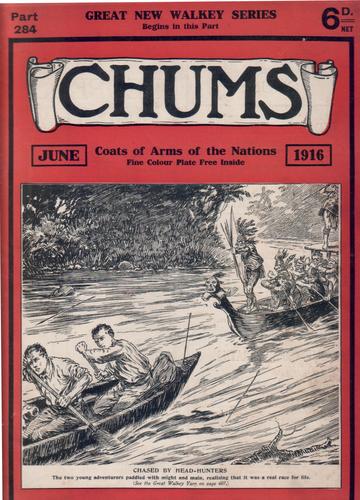
Although the Religious Tract Society formed in 1799 had already begun to produce material aimed at children, The Youth’s Magazine was the first regular publication of its kind. As the emphasis on literacy as a path to spiritual enlightenment took hold, the magazine spawned over 40 imitators in the first half of the nineteenth century. Those were followed by more secular “comics,” such as Chums, The Eagle and The Beano, which in turn inspired the counter-culture magazines of the late twentieth century from Mad to Viz.


We’ve come a long way from The Reformation! Siobhan Lam has posted (on the Victorian Web site) a synopsis of the story whose key moment the picture captures. Eliza Mancel, the only daughter of fond wealthy parents, is “endowed by Heaven with a very beautiful person, a fine capacity, and a very retentive memory.” But she is also a spoiled brat with a bad temper. After alienating all her friends and family, Eliza at last becomes ashamed of her behaviour and asks her parents for “advice and directions.”

This is her moment of reformation, and her “humble and ingenuous confession rekindled all the latent sparks of love in the bosoms of her parents.” While her mother is incapacitated by her feelings, Mr. Mancel teaches Eliza to look to God. From then on, Eliza Mancel is utterly good and pious, all her friends and family love and admire her, and she grows old and dies happy. The narrator then reminds his audience to check their tempers and beware of gaining evil habits that may be hard to reform later. To help the reader on his or her young way, the piece ends with Luke 18:13 – “God be merciful to me a sinner.” (The story is signed "E.T.")

William Brodie Gurney (1777-1855)
editor and parent

William Gurney was a joint editor of the magazine for the first ten years of its existence, and remained its treasurer for thirty years. He continued to contribute occasional pieces and involve himself in its production until his death. His first son was born the year before he founded The Youth Magazine, and his first daughter the year before he published The History of Miss Mancel as a warning to children and their parents.

The Youth''s Magazine, 1832

Saturday, 22 December 2012

HENRIETTA PATTERSON (1737-1824) AND THE GIFT OF A TURBOT


Henrietta Patterson and Thomas Collins, aunt and uncle of my 3x great grandmother, were married on 19th November 1761. Mr Collins, according to his obituary in The Gentleman magazine, "had the happiness to be united to a lady whose views in life were quite accordant with his own."

Thomas was a successful builder, and an ornamental plasterer of distinction, the favourite of the great 18th century architect Sir William Chambers. His wife Henrietta was “a bright example of conjugal affection and urbanity.” Certainly Thomas, and presumably to some extent his wife too, mixed in the most urbane circles imaginable for the time – he was “a desirable member of the society of Dr Johnson,” the pre-eminent wit and raconteur. 

 Samuel Johnson (1709-1784),
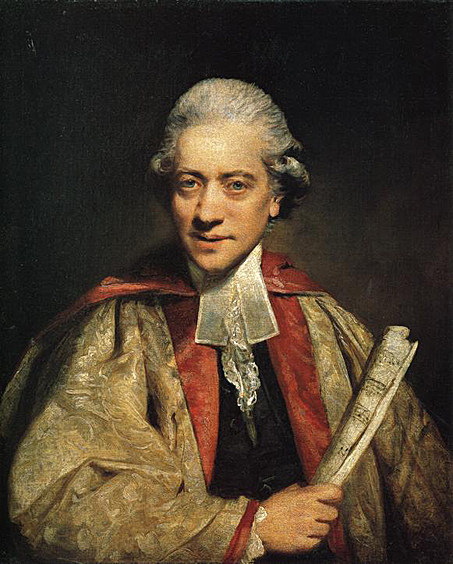
Giuseppe Baretti (1719-1789) and Charles Burney (1726-1814)
all painted by Sir Joshua Reynolds, another member of their circle

The obituary drops in the names of other members of the Collins’ circle, with which I am less familiar, but which presumably would have impressed the reader in 1830 – Giuseppe Baretti was a literary critic and friend of Dr Johnson; William Strahan was the publisher of many of Johnson's works including his celebrated Dictionary; John Nichols published Johnson's Lives of the English Poets; Rev Dr Charles Burney was another friend of Johnson and a noted music historian; Major James Rennell was surveyor-general of Bengal and a pioneer of the emerging science of oceanography. All are recorded as friends of the Collins's.

William Strahan (1715-1785) by Reynolds, 
James Rennell (1742-1830) by Scott,
and Sir Harry Trelawney (1756-1834) by an unknown artist

The private papers and public impressions of the work of all these great men are the substance of weighty archives in universities and galleries around the world. But I'm delighted to own a letter written to my 5x great aunt Henrietta Collins nee Patterson in 1795. It's not from any of the above; but it's written in very much the same sparklingly witty tone that one would expect from any of that circle, by a certain Thomas P. Walter. I think Walter may have been another of the Johnson crowd, as he makes reference to Johnson in the letter, and he may have been a doctor, as he discusses ships' hospitals at one point.

Mr Walter writes from Yarmouth, where he is hoping to catch a packet boat, but keeps missing his chances by virtue of not getting up early enough. A few days since, he writes, I was going to embark with two Turks, a Jew, a Frenchman, a Bankrupt and Sir Harry Trelawney, but the vessel sailed before breakfast, and I let Monsieur, Moses and the two Musselmen get maukish together without contributing to “the publick stock of harmless pleasure” as Johnson says on another occasion. As to myself, I always prefer embarking after dinner, and I may then politely say to every morsel, before I swallow it, “Jusq’au revoir.”

A British coastal packet

He complains about shortages caused by the war – the Napoloeonic War – which result in too few beds for the number of passengers on board the packets, whose scheduled journeys along the coast might last several days. A packet that makes up only eight beds, carries twenty, thirty and forty people. I am sure this war must be materially against the interests of the country!

He wishes Thomas and Henrietta good health and recommends the sea air. But the main purpose of his letter is to warn Henrietta that he has occupied himself while waiting in sending her an unusual gift. In one wonderful sentence he announces, I should not have troubled you with this letter but to say that I have availed myself of my situation here to add to my gratifications by forwarding to you a Turbot with the proper appendages, which I take the liberty of hoping you will do me the Honour to accept.

A turbot

A turbot! It's not quite as far-fetched as it sounds. A fish could be packed in ice or straw to keep it fresh. But from Yarmouth in Norfolk to Mrs Collins’ address in Berners Street in central London is 115 miles as the crow flies, perhaps 150 by mail coach - a long day's journey. A flat fish sent on 22nd July (the date of Walter's letter), even in a wet English summer such as they were having that year, would be less than fresh by the time it arrived. Perhaps Thomas Walter is acknowledging that when he adds, it will be a fine one – at least I trust you will rely on the intention.

I do sometimes wonder if the whole thing is a practical joke, leaving Henrietta in dread of a rotten fish which never arrives. Thomas cheerily signs off his letter with another splash of grim humour: I propose daily to get into one of these Calcutta Cutters where I may be either smothered or drowned. Adieu, dearest Madam, your ever obliged, devoted & affectionate Th. P. Walter.

Whatever you're eating on Christmas Day, Season's Greetings from Tall Tales!

Saturday, 15 December 2012

WILLIAM HENRY GURNEY SALTER (1837-1928) AND THE VELLUM BIRTHDAY CARD


A couple of days ago, 13th December 2012, was the 175th anniversary of the birthday of my great grandfather William Henry Gurney Salter. As a rule I don’t celebrate the 175th anniversary of many ancestors’ birthdays – that way madness lies. But I am reminded of this one by a rather special birthday card which he received on his 85th, and which survives in the family archive.


To describe the card as handmade is to describe a Vermeer as hand-painted. It is an ornately inscribed booklet: two sheets of stiff paper, hand-stitched together and then bound by vellum straps and red silk ribbon into a vellum cover.


Inside, in the finest of calligraphy, the first page reads simply 1837-1922, in blue ink. The left-hand side of the central spread has his 85th birthday in red – 13th December 1922 – and a black monogram of his initials W.H.G.S. On the right, in gold, a quote from Proverbs XVII 6 which can still bring a lump to my throat because I’m sure my father also once cited it:
Children’s children are the crown of old men: and the glory of children are their fathers.
Below, in red, a simple dedication: With best wishes, W.H.


William had retired only ten years earlier from his position as head of the firm of Gurney & Sons, shorthand writers to the Houses of Parliament. He had succeeded his uncle Joseph Gurney in 1879 and Joseph’s predecessors in the post were Joseph's father, grandfather and great grandfather. William handed over the reins to his cousin William Gurney Angus in 1912; and Angus’s untimely death at the age of 54 only two years later saw the leadership of the firm pass out of the family for the first time in its 160-year history.


The man who took on the weighty mantle in 1914 was Walter Hodgson, the W.H. who drew the exquisite lettering in my great grandfather’s birthday card. Walter came to the post at short notice and in difficult times. Military service of one’s country in the First World War took precedence over civilian occupations and William Salter, only recently retired, returned to his old firm to help Walter settle in and cope with staff shortages. I like to think Walter’s card was a measure of his gratitude and affection for the old man of the firm – William was after all the last link with the firm’s founding family.

Eventually Walter Hodgson ran the firm in partnership with a colleague, Herbert Arthur Stevens. In 1927, a year before William’s death, the partnership was dissolved and Stevens took over in sole charge. The company survives to this day. William dedicated much of his retirement to writing a history of it, which was published privately in 1924. He also took it on himself to update in 1902 the Gurney family history first circulated in 1845 by his grandfather (and Joseph Gurney’s father) William Brodie Gurney – I have William Salter’s own copy with his handwritten notes.

William Henry Gurney Salter (1837-1928)
in 1911, aged 74, the year before his retirement
painted by celebrated portrait artist William Strang

Both books are treasure troves of detailed information and anecdote. But that 85th birthday card from Walter Hodgson, bound up in vellum, is a beautiful and physical illustration of the web of history which they cover.

13th December 2012 was also the 80th birthday of my father-in-law. Happy birthday, Jack!

Saturday, 8 December 2012

FREDERICK REYNER (1852-1915) AND THE BRICK KILN BED


My great great uncle Frederick ran Reyner’s Ltd in Ashton under Lyne, at first with his brother Joseph and then after Joseph’s death in 1891 as sole proprietor. The company was what was known as a combined firm: Reyner mills both spun cotton and wove it. His large workforce made him a significant figure in the local community and as a result he also served on the local bench as a magistrate. Many of his cases were recorded in the local newspaper The Ashton Reporter, mostly the sort of petty misdemeanors that itch the skin of a well-ordered patriarchal society such as Ashton’s.

The Ashton Reporter building on Warrington Street
(the site now occupied by Marks & Spencer)

By the end of the century Reyner’s was finding it hard to compete with more modern weaving operations. In 1903 it closed one mill altogether and in 1912, having let out its weaving sheds to another firm, concentrated on spinning alone. It was against this background of decline in the industry that Charles Allen appeared before Frederick on Monday 24th February 1902.

Mr Allen, a middle-aged man, still regarded himself as a weaver; but the fact was that he hadn’t worked in that capacity for three years. Instead he scraped a living filling and delivering bags of coal. It was a hand-to-mouth existence, and of course thirsty work.

A lodging house, or doss house (this one in London)
where often beds were used in shifts by different men throughout the day

Mr Allen, who I think was relatively new to the area, was staying at the Model lodging house in Scotland Street, Ashton, built in the 1890s to accommodate itinerant cotton workers. At no more than a few pennies a night its facilities were, one assumes, basic, and it seems that Mr Allen had planned to indulge himself with a little luxury the previous Saturday night. He left a full shilling, twelve pence, with the mistress of the Blue Bell inn down the road. But he went drinking elsewhere and found himself locked out of the Blue Bell when he returned there after closing time.

With just tuppence in his pocket he wandered up to the Model – but all the beds there were occupied, and he had no choice but to walk away. It was a bitterly cold winter’s night, and Charles asked a policeman where he might find a bed. All the constable could suggest was that Charles keep walking. This he did “until he was tired and done up.” At about half past three in the morning he found himself passing a brick kiln belonging to one George Barlow. It must have been recently fired because it was open, empty and – most importantly – still warm.

A brick kiln (this one in Nettlebed, Oxfordshire)

Charles gratefully stepped in and lay down, and it was there an hour later that Constable Cameron found him fast asleep. Although he may have been new to the area, Mr Allen was, it emerged, no novice at sleeping rough. Speaking for the prosecution at the hearing, a certain Superintendent Hewitt reported that Allen had seven previous convictions, six of them for sleeping out. “For a time,” Hewitt recounted, “Allen has kept teetotal, but he has broken out again.” Lugging coal sacks is thirsty work. It may have been in part a charitable act by Frederick Reyner, the mill owner with no work for weavers, when he sentenced the prisoner to seven days’ detention in a warm cell.
Related Posts Plugin for WordPress, Blogger...